|
Act III · The Prophetic Blueprint RIZQ · بَابُ الرِّزْقِ The Prophet Was a Businessman, Not a MonkZuhd is not an empty wallet. It is a heart the dunya cannot buy. |
|
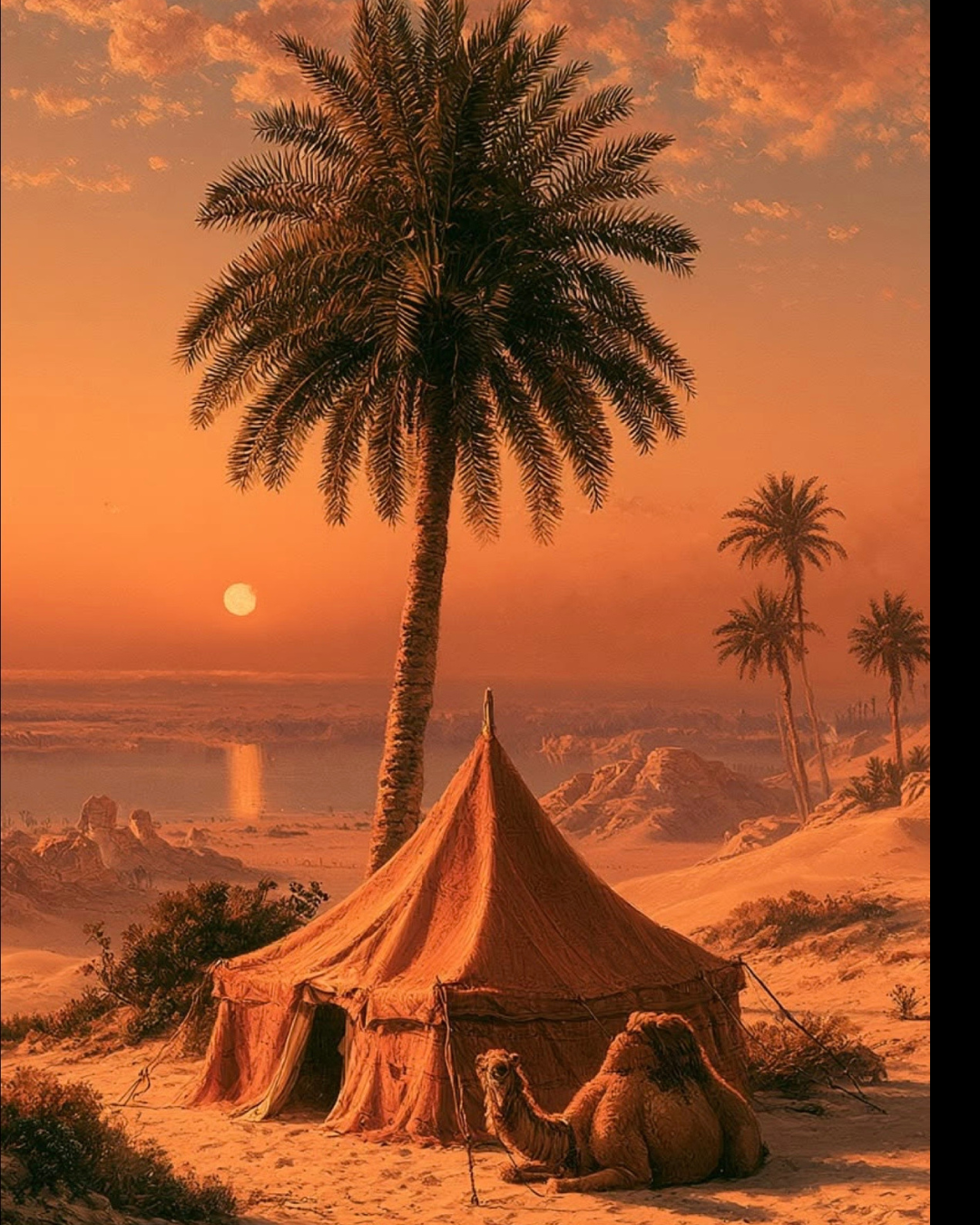 |
|
You have been telling yourself, on and off, for years, that earning a lot of money would be un-Islamic. That a real believer keeps his head down, takes his small salary, makes du'a, and waits for jannah. That ambition is dunya. That building a business is greed dressed in halal language. That the deeper Muslim is the broker one.
You did not read that in the Quran. You did not hear it from the Prophet ﷺ. You imported it. The romantic poverty narrative was borrowed from a different religion's monasteries and slipped into your Muslim head while you were not paying attention.
The man you were taught to love walked into the caravan markets of Sham as a young trader. Before he was a prophet, he was a businessman. He carried merchandise. He negotiated. He delivered. He was known in two cities of commerce as al-Amin, the trustworthy, before any verse of the Quran was revealed to him. The woman who later became his wife, Khadijah (may Allah be pleased with her), hired him because his name was the cleanest in the market. The first money that paid the bills of the first three years of revelation was her trading capital.
Islam never told you to be poor. Islam told you not to be owned. There is a deep, important difference, and forgetting it has cost the ummah generations of buried wealth and missed da'wah.
|
“Islam never told you to be poor. Islam told you not to be owned.” |
|
Section One Islam Never Told You To Be Poor. It Told You Not To Be Owned. |
I |
|
|
The Quran is not subtle about this. Three verses. One instruction. Read the order.
|
|
Ayah I · Surah Al-Jumu'ah 62:10
فَإِذَا قُضِيَتِ الصَّلَاةُ فَانتَشِرُوا فِي الأَرْضِ وَابْتَغُوا مِن فَضْلِ اللَّهِ
Fa idha qudiyatis-salatu fantashiru fil-ardi wabtaghu min fadlillah.
“When the prayer is finished, then disperse through the land and seek the bounty of Allah.” Salah. Then intishar, dispersing into the land. Then ibtigha', seeking bounty. Not salah, then a vow of poverty. Salah, then the market.
|
|
|
Ayah II · Surah Al-Mulk 67:15
هُوَ الَّذِي جَعَلَ لَكُمُ الأَرْضَ ذَلُولًا فَامْشُوا فِي مَنَاكِبِهَا وَكُلُوا مِن رِّزْقِهِ
Fa-mshu fi manakibiha wa kulu min rizqih.
“It is He who made the earth manageable for you, so walk in its paths and eat of His provision.” The verb imshu is the command form. Walk. Move. Engage. Eat what comes from honest engagement. The earth was made dhalulan, manageable, exactly so you would put your hand on it.
|
|
|
Ayah III · Surah Al-Baqarah 2:275
وَأَحَلَّ اللَّهُ الْبَيْعَ وَحَرَّمَ الرِّبَا
Wa ahalla-llahu al-bay'a wa harrama al-riba.
“Allah has permitted trade and forbidden riba.” The halal contract is named. The haram contract is named. Trade itself is endorsed in the Mushaf, in capital letters, by Allah Himself.
|
|
|
|
If your version of Islam has you feeling guilty for trying to earn, your version of Islam is missing three verses Allah ﹰ thought important enough to put in the book. The book is fine. The reception is broken. Fix the reception.
The instruction is not “be rich.” The instruction is not “chase the dunya.” The instruction is “do not refuse the bounty Allah is offering, and do not let it own you when you take it.” That is a much more honest and much harder spiritual project than poverty pretending to be piety.
|
|
II |
Section Two The Quran's Halal-Licence Is Not Subtle |
|
|
Read Surah Al-Qasas, ayah 77. Four clauses. Each one a brick in the wall against monastic poverty.
|
|
01
Seek the Akhirah With What He Gave You
Money is one of the things He gave you. Use it for the akhirah. The akhirah will be paid for in dinars and dirhams of khayr, and you are responsible for some of the supply.
|
|
|
02
Do Not Forget Your Share of the Dunya
The verse names a nasib of the dunya that is yours. Not the goal. Your operating allowance. A Muslim who refuses his lawful share is not more pious. He is missing an instruction.
|
|
|
03
Do Good, as Allah Has Done Good to You
Be a giver, because you have been given to. The giving hand is the better hand (Bukhari 1429). Allah scales the responsibility to the resource.
|
|
|
04
Do Not Seek Corruption in the Land
The fence. Earn yes; corrupt no. Build yes; harm no. Trade yes; riba no. The fence is the discipline. The market is the field.
|
|
|
|
Taken in full, the ayah names the whole of a Prophetic economic life. Earn. Save your share. Give. Stay clean. There is no monastery in it.
|
|
Section Three Zuhd Is a Heart-State, Not a Balance-Sheet |
III |
|
|
The word zuhd is not a synonym for poverty. The salaf were precise about this. Imam Ahmad was asked to define it. He said zuhd is when the dunya is in your hand but not in your heart. Hasan al-Basri said the zahid is the one whose joy at a gain is no greater than his joy at a loss.
That definition opens the door. A wealthy Muslim can be zahid. A poor Muslim can fail to be zahid. The poor Muslim staring at the rich Muslim's car with envy is closer to the dunya in his chest than the rich Muslim who paid for the car with halal money and uses it to drive to the masjid and to deliver iftar boxes. The proof is in the ledger of the Sahaba.
|
|
Uthman ibn Affan
The Well of Rumah
Bought the well from its merchant, gave it as waqf so Madinah could drink free forever. The Prophet ﷺ smiled.
|
|
|
Abd ar-Rahman ibn Awf
Barakah in the Market
Arrived in Madinah with nothing, made the wealthiest man in the city on honest dealing, financed expeditions and freed slaves.
|
|
|
Abu Bakr as-Siddiq
The Day of Tabuk
Spent every dirham he had. Asked what he left his family, he answered: “Allah and His Messenger.”
|
|
|
|
Each of these men held the dunya in their hand. None of them let it into their heart. That is the model. The opposite is also recorded. A poor man who curses the rich because they are rich has not understood zuhd. He has cosplayed it. The Prophet ﷺ said the upper hand is better than the lower (Bukhari 1429). If you cannot be the upper hand because you have made it haram for yourself to earn, you have removed yourself from one of the highest-impact forms of worship in Islam.
|
|
IV |
Section Four The Trader Who Is With the Prophets |
|
|
The Prophet ﷺ said in Sunan at-Tirmidhi 1209, narrated by Abu Sa'id and graded hasan:
|
|
The Prophet ﷺ · Sunan at-Tirmidhi 1209 · Hasan
التَّاجِرُ الصَّدُوقُ الأَمِينُ مَعَ النَّبِيِّينَ وَالصِّدِّيقِينَ وَالشُّهَدَاءِ
At-tajir as-saduq al-amin ma'a an-nabiyyina wa as-siddiqin wa ash-shuhada'.
“The truthful and trustworthy merchant will be with the prophets, the truthful ones, and the martyrs.”
|
|
|
|
|
|
Read the company. The man Allah ﹰ raises to the same rank as those who carried revelation, those who lived their iman, and those who died for it, is a merchant. A specific kind. Truthful in speech. Trustworthy in delivery. Clean in contract. This is not a sideline hadith. It is a doctrine. Islam does not view the marketplace as a regrettable necessity. It views the truthful marketplace as a high spiritual station, ranked next to martyrdom.
The Prophet ﷺ also said in Sahih Bukhari 2072, narrated by Miqdam, “No one eats better food than that which his own hands have earned. The Prophet of Allah Dawud (peace be upon him) used to eat from the work of his hand.” The food on your table that you bought with your own halal salary is described as the best food a human being can eat. Not the inherited food. Not the begged food. The earned food. The same hand that prostrates is the hand that earns. Both are worship if both are clean.
If you have been carrying around quiet guilt about wanting to make money, stop at this hadith. Make the money. Make it honestly. Be the merchant the Prophet ﷺ promised to keep company with.
|
|
Section Five Five Rules of a Prophetic Businessman in Your Week |
V |
|
|
You do not need a new business model. You need five practical defaults, lifted from the Sunnah, that turn your existing job into worship without changing a single line on your contract.
|
01 |
Pray on Time at Work
The fajr you delayed for an early call is the barakah you did not carry into that deal. Reorder your calendar around the adhan, not around the meeting.
|
|
|
02 |
Refuse the Haram Contract Early
Say no when the no is cheap. The man who never said no when it was cheap usually cannot say it when it is expensive.
|
|
|
03 |
Pay Zakat as a System
Pick a date in the Hijri calendar. Calculate, transfer, witness. Once a year. Wealth you have not paid zakat on is not yours yet. It is contaminated.
|
|
|
04 |
Tip Generously
The Prophet ﷺ was never miserly. Be the upper hand at the small things; Allah ﹰ will make you the upper hand at the big things.
|
|
|
05 |
Mentor One Younger Muslim in Halal Earning
The community is short of older Muslims who can sit with a twenty-five-year-old and explain how a halal living is built. Be one. One coffee, one hour, one month. The ummah you leave behind will be richer because you sat down.
|
|
|
|
|
Five rules. Run them next week. The work week becomes a Sunnah, not a tax on the deen.
|
|
The Assignment
Write down, on a piece of paper this week, three things: your current monthly income, what percentage of it you have given to a halal charity in the last twelve months, and one habit of the Prophet's commercial vocabulary you will adopt this month. Tape it to your wallet. Look at it before every business meeting for the next four weeks.
|
|
|
|
Closing Duʾa
● ○ ●
اللَّهُمَّ اكْفِنِي بِحَلَالِكَ عَنْ حَرَامِكَ، وَأَغْنِنِي بِفَضْلِكَ عَمَّنْ سِوَاكَ
Allahumma-kfini bi-halalika 'an haramika, wa aghnini bi-fadlika 'amman siwak.
“O Allah, suffice me with what You have made lawful so I have no need of what You have forbidden, and enrich me with Your favour so I have no need of anyone but You.”
(Sunan at-Tirmidhi 3563, Ali ibn Abi Talib, hasan)
This is the exact theology of Prophetic wealth in two lines. Sufficiency in the halal. Independence in Allah. The du'a does not ask Him to make you poor. It asks Him to make you so blessed in the halal that you never have to look at the haram, and so independent in His favour that you never have to lower yourself to anyone else. May Allah ﹰ give us, this week, halal income that exceeds our need, and a heart the dunya cannot buy.
|
|
Until next Friday, may Allah open the halal doors for us and shut the haram ones without our even having to knock. The SIRAAJ |
|

